Breaking Through the AI Bandwidth Wall: National Sun Yat-sen University’s Silicon Photonics Technology Builds Taiwan’s Next Semiconductor Stronghold
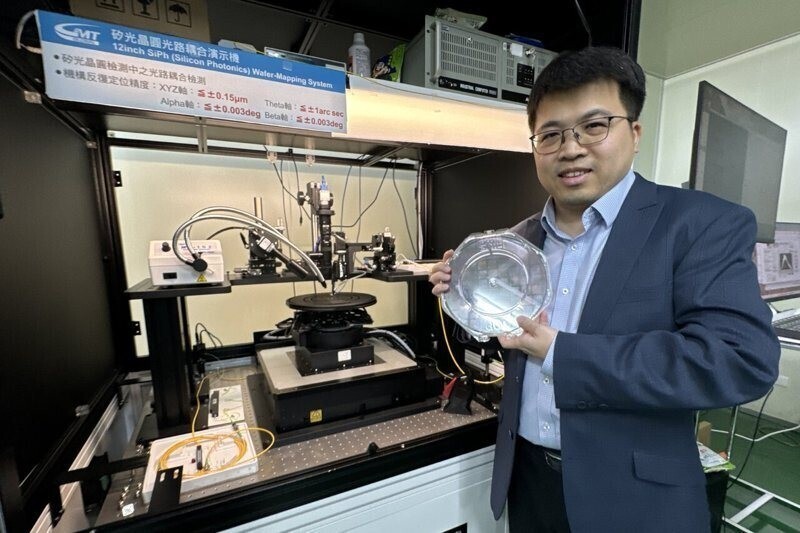
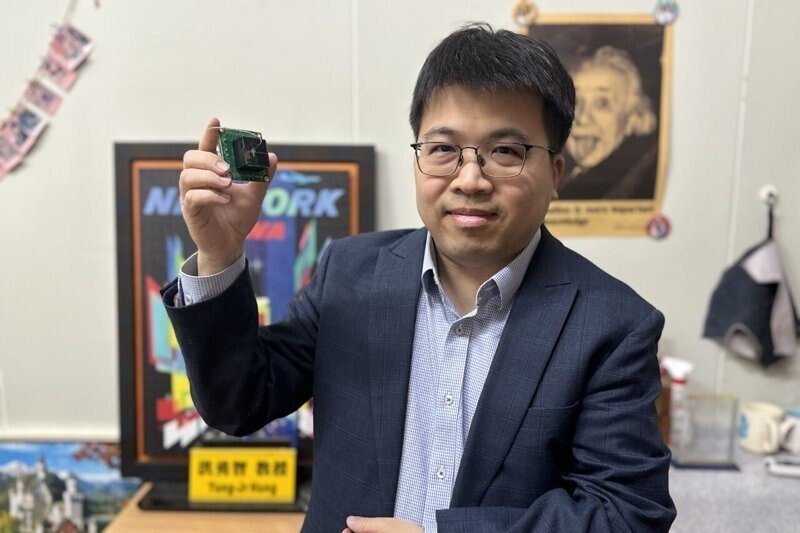
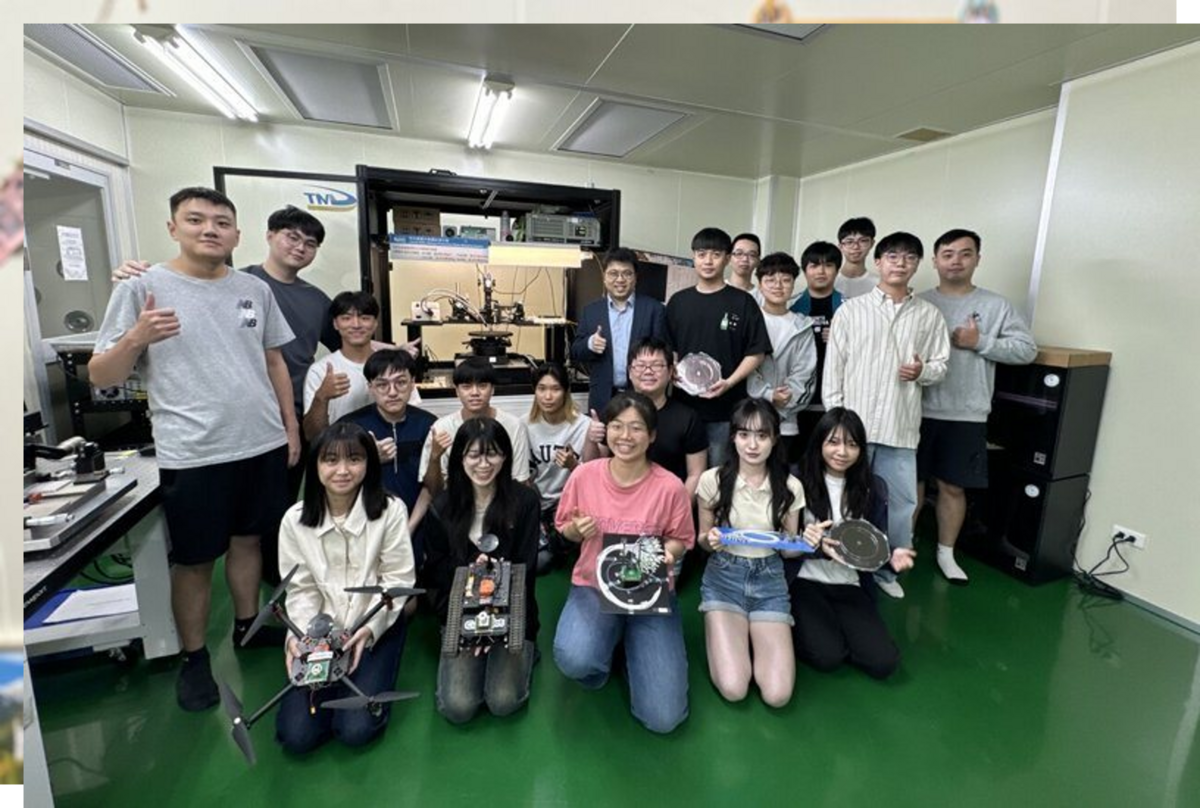
In the era of explosive AI growth, silicon photonics has emerged as a key solution to overcoming computing bottlenecks. Trends such as “copper out, optics in” and “replacing electricity with light” are gradually taking shape. Although silicon photonics has been under development for more than 20 years, its role remained unclear for a long time. Only after the global AI boom did it suddenly rise to prominence.
Why has silicon photonics made such a dramatic comeback at this moment? The answer lies not only in the maturity of the technology itself, but also in the fact that industry demand has been pushed to its absolute limits.
AI Computing Explosion: Silicon Photonics Moves from the Edge to the Center
Professor Hung Yung-Jr of the Department of Photonics at National Sun Yat-sen University began researching silicon photonics in 2011 and is considered one of Taiwan’s earliest pioneers in the field. As silicon photonics gained renewed attention, he became one of the important driving forces behind its development. His research team also participated in the joint development of TSMC’s silicon photonics platform from the ground up.
Hung explained that silicon photonics is not a new technology. It began developing more than two decades ago, mainly for optical communications. However, data traffic at the time was not large enough, market demand was limited, and several technical challenges prevented widespread adoption. Eventually, it became merely one option among many technologies without a clearly defined role.
He admitted that the dramatic revival of silicon photonics is largely thanks to AI.
“We never thought this technology would go this far before, because there simply wasn’t a need for that much computation. But AI has created almost limitless demand.”
Copper Wires Overheat; Light Transmission Offers Lower Loss and Higher Speed
Hung noted that AI demand is growing exponentially. The number of CPUs and GPUs used in AI systems is staggering, with millions of chips computing simultaneously. Under high-speed transmission conditions, traditional copper wires face both signal loss and power consumption issues, causing computing power to become trapped in overheated conductors.
“Copper wires have reached their limit.”
He explained that electrical transmission alone can no longer sustain AI growth.
“Heat generation, power consumption, and bandwidth are all bottlenecks now. At this point, it’s no longer about whether we want to use light — we have no choice.”
As a result, the industry has shifted toward optical technologies, bringing silicon photonics back from a peripheral role to the center of technological innovation. It has become a critical solution for overcoming AI computing bottlenecks, enabling AI chips not only to “compute quickly” but also to “move data out efficiently.”
Light has unique advantages: because photons carry no electrical charge, they generate far less heat and dramatically reduce the power loss associated with data transfer. This allows data to travel faster and more reliably, eliminating communication congestion and improving computing efficiency.
Simply put, silicon photonics upgrades crowded, speed-limited country roads into high-speed optical highways.
Hung said that once transmission demand became large enough, silicon photonics suddenly gained immense value. When demand is pushed to the limit, technology gets forced into existence. Silicon photonics was pushed upward by the entire industry. Another major advantage is cost. Silicon is abundant and inexpensive — essentially derived from sand. Combined with advanced semiconductor manufacturing processes capable of producing highly complex chips at low cost through mass production, silicon photonics has become an ideal solution for AI computing power.
Optical Interconnects: The Key to Next-Generation AI
Hung compared silicon photonics in AI systems to a “social networking expert.”
GPUs must constantly communicate with one another. If communication is not fast enough, overall computing efficiency slows down. Inside AI server racks, optical interconnects continuously transmit data at ultra-high speeds, much like a symphony orchestra in which every instrument is constantly moving and interacting.
Today, optical transmission technology has reached speeds of 1600G per second — a critical measure of computing capability.
NVIDIA has warned that if optical interconnect technology cannot succeed, AI development may hit a wall after 2027.
TSMC began investing in silicon photonics process development in 2016. At that time, only a handful of organizations in Taiwan were working on the technology. Through academic connections, TSMC partnered with Hung’s team, and the collaboration has continued ever since.
Hung recalled that resources were initially scarce and progress gradual. But when AI computing demand exploded in 2022 and 2023, NVIDIA further encouraged TSMC to prioritize silicon photonics development.
“Suddenly, all the resources poured in — funding, manpower, everything.”
This accelerated technological maturity, particularly in the development of Co-Packaged Optics (CPO), a key technology that integrates electronic chips and photonic chips into the same package through advanced packaging techniques.
More precisely, silicon photonics is not entirely about replacing electricity with light. Instead, optics and electronics work together: chips still perform computations electrically, while high-speed data transmission increasingly relies on optical communication.
This breakthrough has dramatically boosted computing performance and helped Taiwan secure a leading position in the global AI race. The technology officially entered mass production this year after more than a decade of effort.
Hung noted that optical communication was originally designed for long-distance transmission, but AI demand has pushed it into extremely short-range applications — even distances measured in centimeters. This wasn’t a natural evolution of technology. AI computing demand forced it to happen.
Taiwan’s Supply Chain Becomes the Global Core
Hung emphasized that Taiwan holds a crucial position in the silicon photonics and AI supply chain. From design and manufacturing to advanced packaging, the ecosystem is highly integrated within Taiwan, making the country central to global AI development.
In particular, Taiwan’s manufacturing capabilities are extremely difficult to replace.
In addition, National Sun Yat-sen University has collaborated with TSMC since 2018 on silicon photonics development, participating in silicon photonic chip design for COUPE technology. More than 15 graduates from Hung’s laboratory have joined related R&D units, contributing to next-generation silicon photonics technologies through continued industry-academia collaboration.
To strengthen international semiconductor partnerships, Kaohsiung Mayor Chen Chi-Mai led a delegation to Tucson — known as the “Optics Valley” — in March this year. The delegation signed a “Six-Party Semiconductor Ecosystem and Global Talent Partnership Memorandum of Understanding” with local government and academic institutions.
Chen stated that the global semiconductor industry is entering the post-Moore’s Law era, where merely shrinking transistor sizes is no longer enough to sustain performance breakthroughs. Instead, heterogeneous integration — combining different technologies into unified systems — will become the key to future advancement. Among these technologies, silicon photonics is viewed as one of the most important solutions for overcoming AI’s “bandwidth wall.”
Driven by the AI wave, silicon photonics has evolved from a laboratory technology into an industrial core technology. The Kaohsiung City Government is actively investing in advanced technologies and international cooperation, while companies such as TSMC and NVIDIA lead the development of critical processes and products. Meanwhile, academic institutions led by National Sun Yat-sen University continue strengthening foundational research capabilities.
Through collaboration among government, industry, and academia, Taiwan is accelerating the creation of a complete silicon photonics ecosystem and positioning itself strategically at the center of the AI computing revolution.
— Originally published by United Daily News (UDN) on April 5, 2026.